When it comes to sterility levels of supplies in laboratory environments, sterility is not just a label; it is an essential safety requirement. This requires laboratory consumables that meet strict standards and USP requirements to ensure they are safe for sensitive applications in diagnostics, pharmaceutical preparation, and research.
Using a regulated sterile supplier is crucial to sourcing certified sterile products designed and manufactured to meet these strict sterility standards for laboratory applications. This blog will discuss the meaning of SAL 10⁻⁶, USP <71> sterility testing, and USP <85> endotoxin testing, and the importance of the Sterile-R symbol on packaging.
What does SAL 10⁻⁶ mean?
Sterility Assurance Level (SAL) is the gold standard for sterile laboratory consumables. It indicates a 1 in 1,000,000 chance of a surviving microorganism, providing a 99.9999% sterility assurance level.
This is especially important for critical laboratory supplies, including cell culture flasks, pipettes, and needles. While no sterilization process can guarantee the complete absence of microorganisms, this is as close as possible to minimizing the risk of contamination. Maintaining this sterility assurance level helps to protect sample integrity and improve reproducibility, while reducing the risk of compromised results and supporting consistency and smooth laboratory workflows.
The Importance of Sterility Standards USP <71> and <85>
In laboratory research or analytical testing, contamination poses the risk of compromising the validity of experiments, leading to inconsistencies in results or costly and time-consuming repetition. Using lab supplies that are manufactured under strict sterility standards is essential for reliability and consistent results, while minimizing contamination risk and staying in line with compliance requirements.
In combination, USP <71> and <85> help ensure microbial sterility and biological safety.
USP <71> Sterility Testing
This method is a leading standard for sterility testing, required to verify safety and prove products meet sterility criteria in accordance with United States Pharmacopeia <71> sterility tests under regulated testing conditions. The test is conducted in an ISO 5 biological safety cabinet, which is maintained inside an ISO 7 cleanroom environment.
Depending on the product being used, testing may be conducted by using either membrane filtration or direct inoculation. USP <71> sterility testing is commonly used for a wide range of products, including injectable solutions, sterile containers, compounded medications, bandages, cosmetics, and medical devices.
The validation process includes:
-
Aseptic Processing: The incubation of samples and testing under controlled aseptic conditions.
-
Incubation Timeline: A mandatory, FDA-regulated 14-day sterility testing period.
-
Continuous Monitoring: For microbial growth over a period of days throughout the 14 days.
If there is no evidence of growth observed after the incubation period, then the product is passed for compliance with the test for sterility. By passing USP <71> sterility validation and meeting stringent standards, it assures the safety and efficacy of products where microbial contamination could increase risks to patient safety.
USP <85> Bacterial Endotoxins Testing
The exposure to excessive endotoxins poses a serious risk to patient safety and can cause serious medical emergencies or affect sensitive experimental systems. This is where the importance of USP <85> testing comes in: the United States Pharmacopeia standard for the Bacterial Endotoxins Test (BET). It is an essential quality control assay used to detect and quantitatively measure the presence of dangerous bacterial endotoxins.
This USP <85> testing is especially crucial for compliance and consumables that may come into direct contact with patient biological systems through intravascular, intrathecal, or intraocular.
These testing methods include:
-
Gel-Clot: A qualitative method to measure endotoxin concentration through gel formation, monitoring changes during the reaction process.
-
Turbidimetric: A quantitative method used to measure endotoxin concentrations through photometric detection of turbidity through clot formation.
-
Chromogenic: A quantitative method using a color-producing reaction to accurately measure endotoxin levels.
The benefits of USP <85> testing are that it helps ensure low endotoxin levels and ensures product reliability and consistency within regulatory standards for laboratory and research applications for safety assurance.
Sterile-R Sterilization
Many laboratory consumables feature a Sterile-R symbol, which indicates and verifies they have been sterilized using radiation, typically through gamma irradiation using ionizing radiation to kill microorganisms. These laboratory consumables include test tubes, petri dishes, pipettes, syringes, and gloves.
This process works by exposing sealed products to ionizing gamma radiation that:
-
Break microbial DNA and prevent replication
-
Eliminate bacteria, viruses, and spores
-
Achieve sterilization without heat or chemical residues
This sterilization process helps to prevent contamination and maintain testing accuracy, and is a cold process that is ideal for use with heat-sensitive laboratory plastics and for terminal sterilization of pre-packed supplies. While offering the benefits of no chemical residues, preservation of product integrity, and reliable sterility. As well as terminal sterilization after final packaging to maintain sterility until use.
Med Lab Supply Sterile Product Lines
At Med Lab Supply, we proudly partner with FDA-inspected facilities that operate under strict compliance with GMP requirements and Class 100 cleanroom regulations to ensure product quality and consistency.
We offer a range of premium sterile supplies, including:
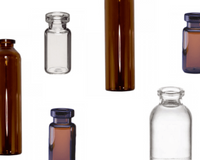
Ultra Spec® Sterile Glass Vials:
These Ultra Spec® sterile vials are considered a gold standard across the industry and meet the highest standards of cleanliness. All vials are manufactured in FDA-inspected facilities operating under cGMP compliance, using Type 1 neutral borosilicate glass, and assembled with non-latex chlorobutyl rubber stoppers.
Key Features:
-
Manufactured and assembled in strict ISO 5 cleanrooms to ensure extremely low particulate levels.
-
Pre-washed and depyrogenated using a high-temperature process to eliminate bacterial endotoxins.
-
Carefully packaged to maintain sterility for transport and storage.
-
All vials are tested for sterility through USP <71> and bacterial endotoxins USP <85>.
-
We can guarantee tight geometric tolerances and low cosmetic defect levels with 100% camera inspection of dimensional parameters and critical cosmetic defects.
-
Ideal packaging solution for sensitive ingredients, offering chemical resistance, neutrality, impermeability, and strength.
These Ultra Spec® Vials are suitable for laboratory use and sterile storage, and upon request, there is a certificate of analysis and test results to validate sterility and for quality assurance. However, these are not 510(k) cleared for the intended use as a medical or pharmaceutical packaging.
Our ALK Sealed Sterile glass vials are certified sterile, depyrogenated vials that meet all the requirements of section 503B, making them ideal for outsourcing facilities, analytical laboratory specimen containment, and transfers.
Key Features:
-
These vials meet all the USP requirements for USP <71> testing and <85> for bacterial endotoxins.
-
Guaranteed sterile and validated through USP <71> and <85> testing, meeting the FDA’s mandatory 14-day protocols.
-
All sterilization is performed in FDA-inspected facilities that comply with cGMP requirements and are assembled in ISO 5 cleanrooms.
Our sterile product lines are manufactured to support contamination-controlled laboratory environments for your needed applications, where sterility assurance and endotoxin control are essential.
Your Trusted Supplier for Quality Assurance
Here at Med Lab Supply, our laboratory supplies adhere to rigorous sterility USP standards and testing to meet the demands of professionals and minimize contamination risks for accurate, reliable results in your work.
We are committed to providing high-quality laboratory supplies you can trust, at affordable costs, with fast shipping to support continuity within your work. Explore our full range of laboratory supplies designed to support accuracy, consistency, and contamination control in your sterile laboratory workflows.